


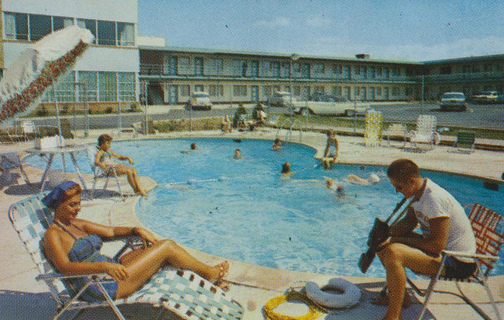
Swan dives, jackknives and cannon balls disrupt the wet mirror finish of the East pool. Splashes striking hot concrete resonate as applause for the aerial-aquatic feats. Stretch out in your favorite chaise lounge with a book from the library (or bring your own). Water music can be piped to poolside. The guitar of Barney Kessel, a House favorite, has washed away many aches. If a standard like “Cool Sunshine” from “East Coast – West Coast Scene” (1955) is not the right tonic, earphones – gratis and hygienic – allow you to sink into carefree slumber accompanied by your own playlist.
The East is modeled after the pool of the Arva Motel (now a Days Inn) in Alexandria VA, one mile west of Washington, D.C., on U.S. Route 50, whither the Old Man’s parents took their four sons during a vacation in June 1972. While the boys frolicked, a different history was being written on the Potomac in central D.C. – inside the Watergate Hotel.
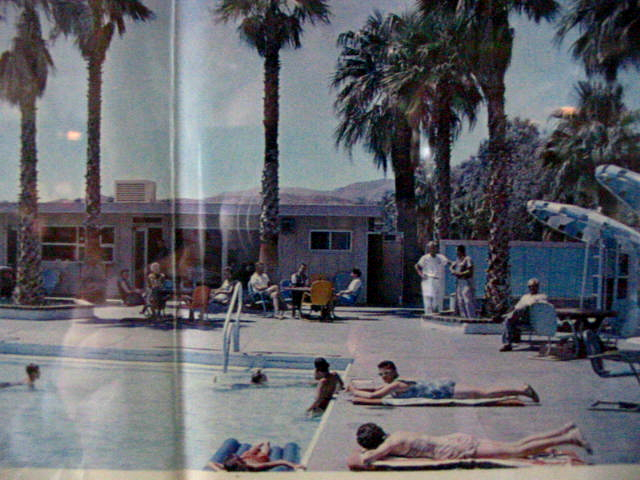
The prototype for the West pool is the circa 1947 watering hole at The Palms in Borrego Springs CA. The names of Hollywood stars from the period haunt the oasis. The Golf Widow communes with the immaterial celebrity presences when not with Astrud Gilberto’s “The Girl from Ipanema” (1964) and Crystal Waters’ “The Boy from Ipanema” (1996).
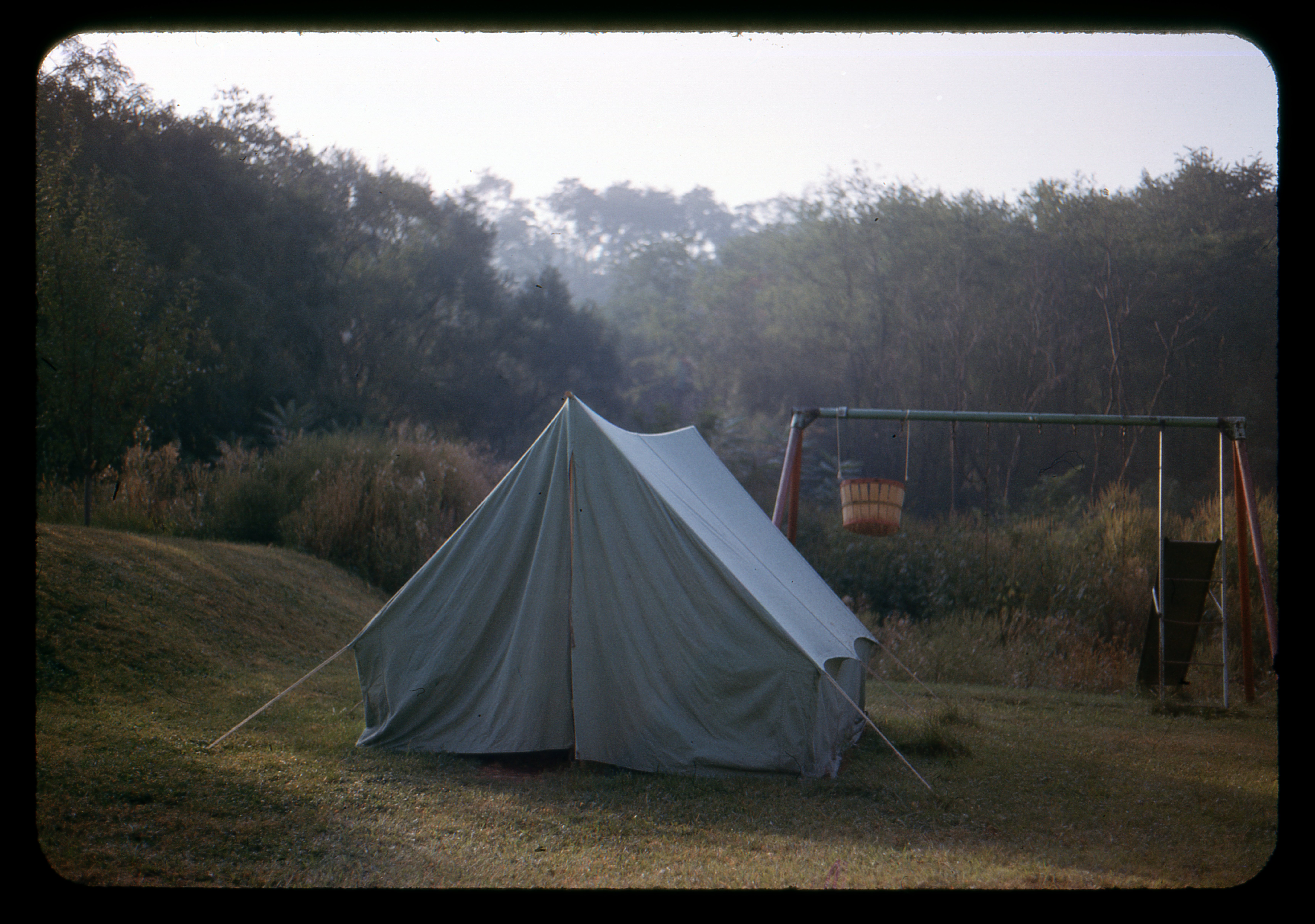
Combat summer heat by washing down ice cream bars (choice of Candy Crunch, Chocolate Eclair and Toasted Almond) and cones (King and Sundae) with municipal water from the Boy Scouts of America® aluminum, 1.75-quart pot (or cool your forehead with it). Although the well protected by its non-permeable tent has not been blessed officially, it is venerated by those who have relished its sacrament of Good Humor and accompanying ablutions.
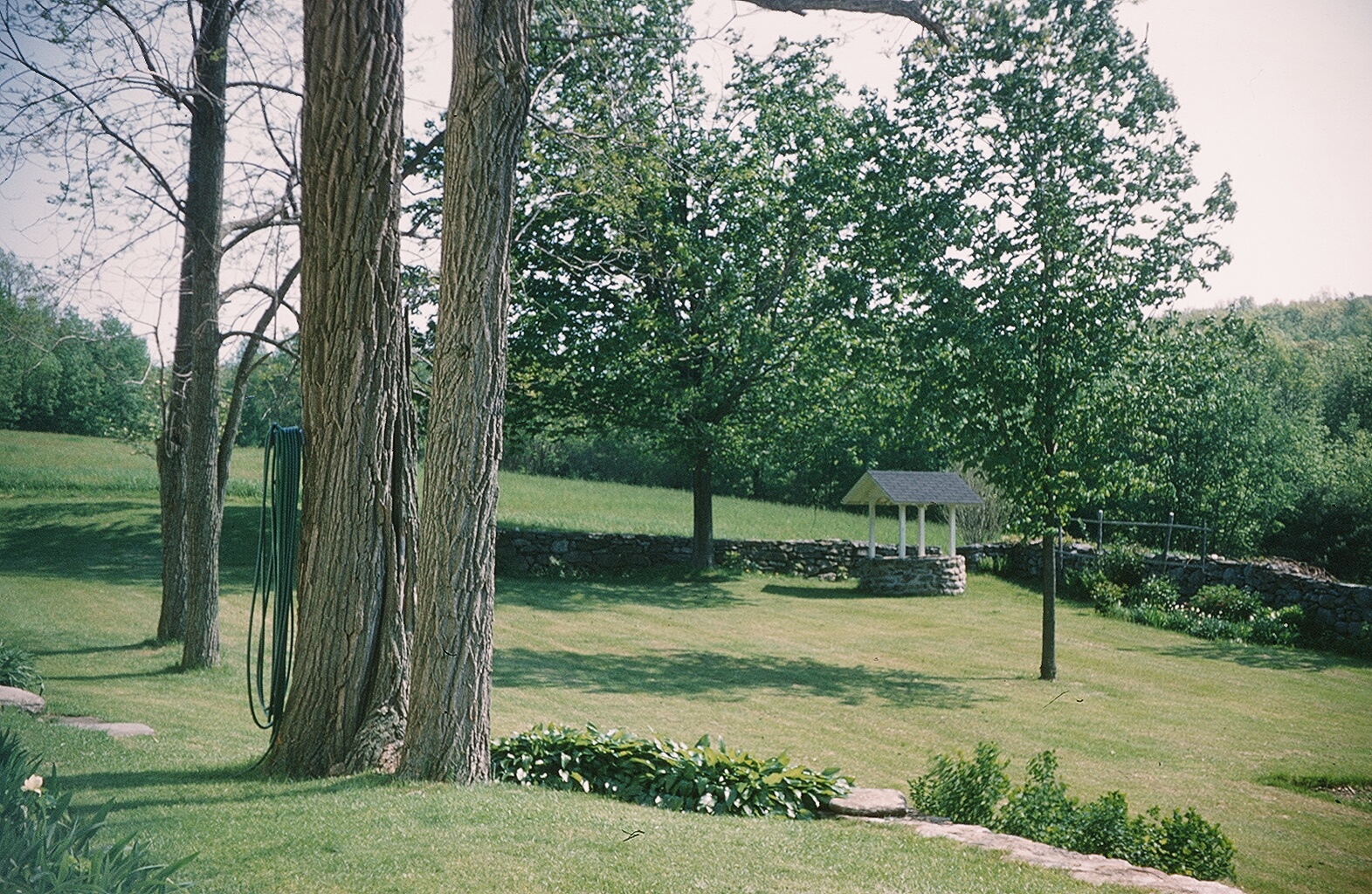
See Wishing Well.

Landlubbers are drawn to the Conservatory Water in Aunt Ruth’s Park, aka NYC’s Central Park, by the nautical derring-do of Stuart Little aboard The Wasp. For the unskilled, this body of water can be a pool of tears, whose source is beneath the Alice in Wonderland sculpture on the north shore.
My arrival at Wilpen Hall for a swim was unannounced. The family was away, summering on a lake island in Ontario, Canada. The outdoor Bad (German for bath, pool, spa; in English, a popular adjective meaning good or bad) was a stretch of the legs around the Shingle-style mansion of 23,000 square feet, which an industrialist forefather of the family commissioned in 1899. A member in good standing of the (secret) Society of Pittsburgh Pool Hoppers, I coveted exclusive Bad Wilpen. I was not the first, as anyone can corroborate in the meticulous records of Hopper conclaves. What saved it from our clutches? Fear. Yes, its rich=powerful owners were feared. Hopping their glistening Bad would be a feather in my cap, so, to capture all the glory, I went alone, without so much as a scout to run interference if domestic staff or groundskeepers cried «Thief!», chased me or reported me to the cops. A Mr. Cooper and a Mr. Gore were the Hall’s liveried butlers, according to my source; they would serve the class struggle by looking the other way. (My source sees everything through the lens of the Frankfurt School.) Hounds belonging to the local hunt club tracked the scent of a fox rather than a live fox or live human such as me. (Ibid.) That left the borough police, who, mobilizing from their station beside a country club on the next hill, could cuff me within minutes. (Op cit.)
Below the Wilpen edifice’s east elevation were three terraces. Two contained formal gardens. A turquoise pool beckoned from the middle terrace. Alas, to reach it, I had to climb the west gate without attracting attention and then blend into three stories of sandstone for the length of the manor’s south elevation. During the dehydrating reconnoiter, I mistook the gabled roof’s seven chimneys, idle in summer, for factory furnaces. Flights of terrace steps descended to flagstones and a liquid rectangle as still as a reflecting mirror. After removing shoes and clothes, I sank in.

I woke in the deep end. The sky was dark. Choppy, waves upheld me in a phosphorescence which disconcertingly lit up other bathers, who addressed me in non-threatening tones. Nevertheless their utterances, which I will call the erstwhile Steel City’s collective unconscious, were warnings.
«Swim against the tide at your own risk. Don’t trust the ground under your feet. Do you have the guts to enter the stream of history? It’s fast. It’s broad. It’s deep.»
Were my Hopper colleagues playing with my mind?
«Remember our dangerious working conditions. Remember our wages. Remember our living conditions: the squalor of our neighborhoods and schools.»
Not far away in a Catholic church in Millvale, I had seen similarly ethereal apparitions in the murals of Maxo Vanka, whose titles range from «Immigrant Mother Raises Her Sons for American Industry» to «Justice», from «Injustice» to «Transcendent Vision». My pool companions, it dawned on me, were former factory employees, immersed in a cleansed afterlife. They broke the surface in unison, chanting mournfully the names of industrial communities they called home.
«Aliquippa, Braddock, Clairton, Duquesne, Homestead, McKeesport.»
They also named industrialized rivers.
«Allegheny, Monongahela, Ohio.»
The aquatic demonstration dispersed, floated upward, mingled there, until interrupted by a different voice, a commanding one.
«Hey! Who are you?»
My source was wrong about the estate staff’s good intentions. I splashed to the closest edge of Bad Wilpen.
«Stop!»
After eluding Mr. Gore or Mr. Cooper, I reported my findings to the Society. Over the objections of skeptics who called me a dreamer, a vial labelled «Bad Wilpen» has been entered in the official records of our chapter. The national center has a backup. Our lawyers tell us nobody can prove the water belongs to Bad Wilpen.

Bad Wilpen images credit
Smithsonian Institution, Archive of American Gardens, Garden Club of America Collection.